It’s natural for patients to feel nervous when receiving treatment or receiving a diagnosis, especially when their health or the health of someone they love is at stake.
Patient stress can have negative consequences for everyone. In some cases, it can negatively impact health outcomes, hinder communication, and make it more difficult for staff to deliver quality care.
While patient stress can’t be completely avoided, it can be mitigated. By providing high-quality healthcare environments for patients and staff, the level of care patients receive can be significantly improved.
The result? Patients feel safe, protected, and comfortable.
Here are our six tips for reducing patient stress through the design of your healthcare clinic.
1. Prioritise Patient Privacy:
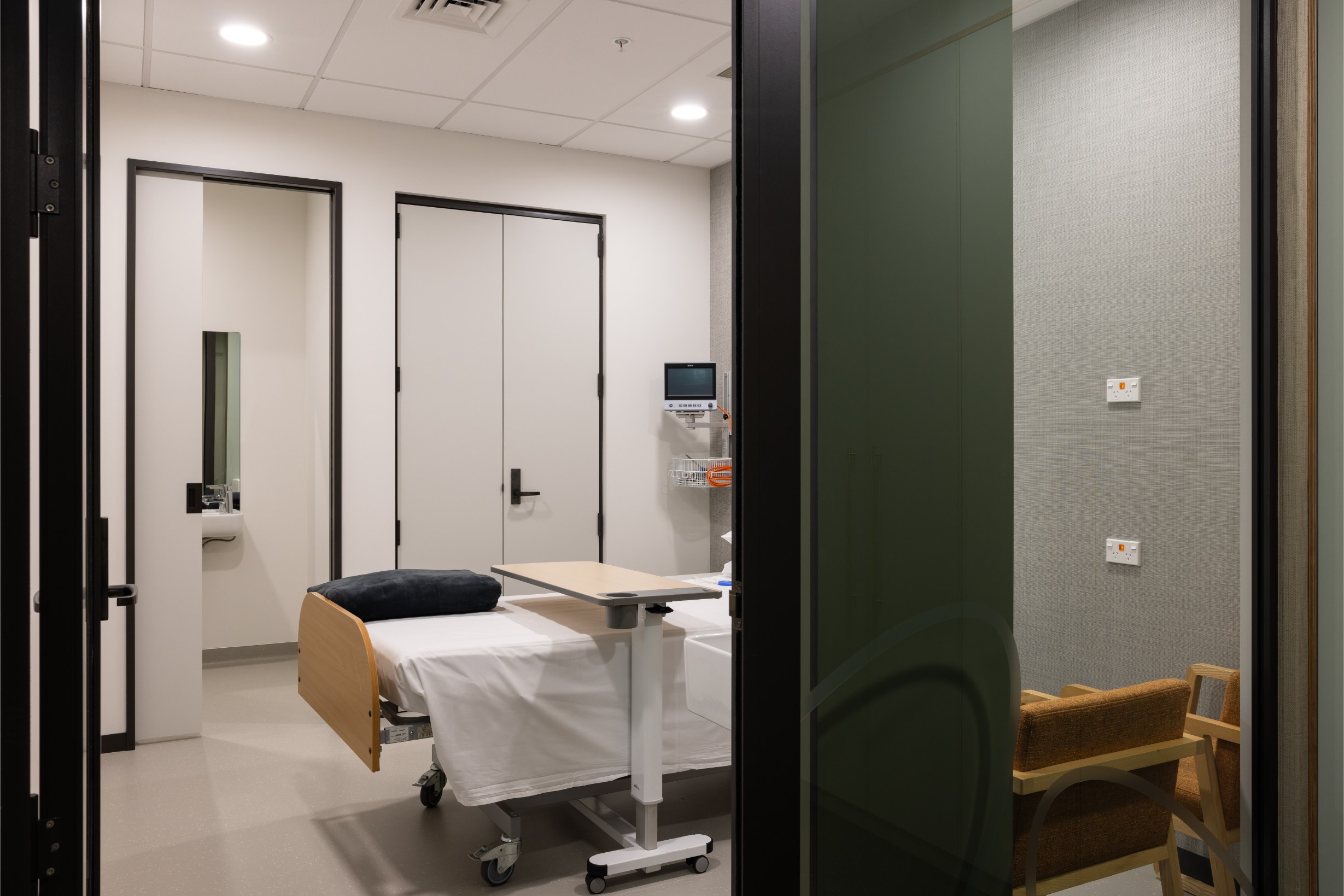
Privacy is a cornerstone of patient dignity. Many patients arrive at clinics during vulnerable moments in their lives, and the design of your space should reflect that sensitivity.
Design tips to enhance privacy:
– Acoustic insulation: Soundproof consultation rooms to prevent conversations from being overheard.
– Visual screening: Use frosted glass films, privacy curtains, or partitions to shield patients during exams or while changing.
– Thoughtful layout: Position treatment and recovery rooms to minimise exposure and foot traffic. Also consider arranging furniture to create comfortable and private settings within your waiting/reception area.
Put yourself in the “shoes” of your patients. If you were a patient at your clinic, where would you feel exposed or uncomfortable?
2. Utilise Wayfinding to Provide Clarity:

Navigating a healthcare facility can be daunting, especially when patients are anxious or in a hurry. Clear, intuitive wayfinding helps patients feel in control and reduces reliance on staff for directions.
Effective wayfinding includes:
– Consistent Signage: Use clear, legible fonts and universal symbols.
– Color-coded zones: Help patients visually distinguish between zones in your clinic.
– Floor maps and digital kiosks: Offer interactive guidance for larger clinics and hospitals.
When patients know exactly where to go, they feel more confident and less stressed, making their entire visit smoother.
3. Provide Relief Through Finishes and Furnishings:

As patients step into your clinic, how does it make them feel? The combination of finishes plays a vital role in creating a welcoming environment for patients, and providing relief from any anxiety they are facing.
Design elements to consider:
– Soft seating and textures: Comfortable chairs and tactile materials help patients relax.
– Biophilic design: Incorporate plants, natural light, and artwork inspired by nature.
– Soothing colour palettes: Use soft blues, greens, and neutrals to promote calm.
– Entertainment and distraction: Provide magazines, TVs, or children’s play areas to ease waiting times.
The goal is to make your clinic feel less like a hospital and more like an inviting, homely space.
4. Ensure Staff Are Close at Hand:

Patients feel safer when they know help is nearby. Whether they’re recovering from a procedure or simply need assistance, quick access to staff can significantly reduce stress.
Ways to improve staff accessibility:
– Nurse call systems: Install nurse call buttons in bathrooms, changing areas, and recovery rooms.
– Visible staff stations: Depending on your facility type and model of care, consider positioning nurses and receptionists where they can be easily seen and approached.
This not only reduces patient anxiety but also enhances safety and staff responsiveness.
5. Provide Access to Key Amenities:
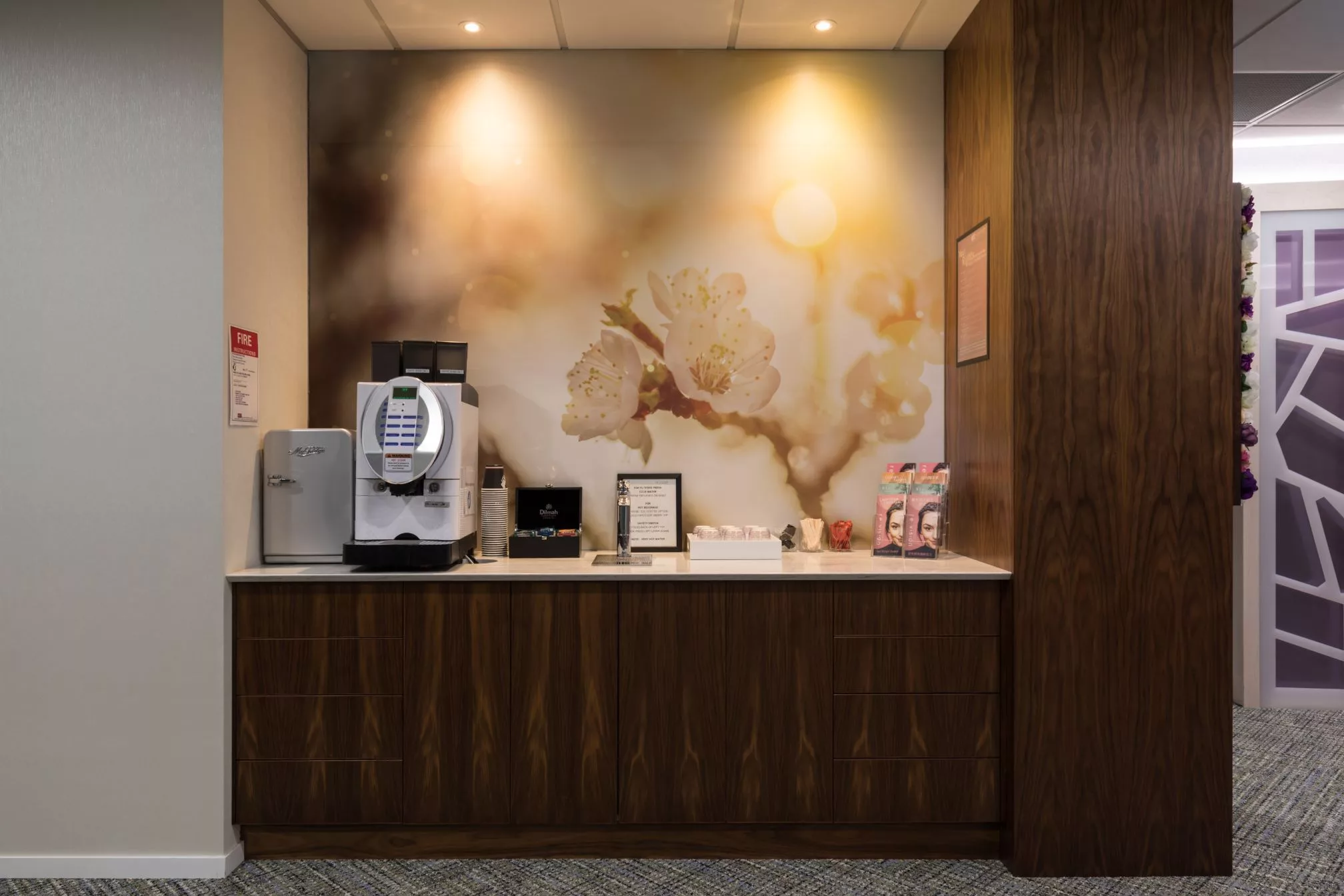
Basic amenities make a big difference in how patients feel during their visit. When patients know their physical needs will be met, they’re more likely to feel relaxed and comfortable.
Essential amenities include:
– Adequate bathroom facilities: Ensure they’re easy to find and well-maintained.
– Refreshment stations: Provide water, or even light tea and snacks in waiting areas.
– Charging points and Wi-Fi: In the digital age, it’s important to keep patients connected and occupied while they wait.
When patients have confidence that these amenities are accessible during their visit, it will help to alleviate the stress in future visits.
6. Consider Accessibility for All Patients:
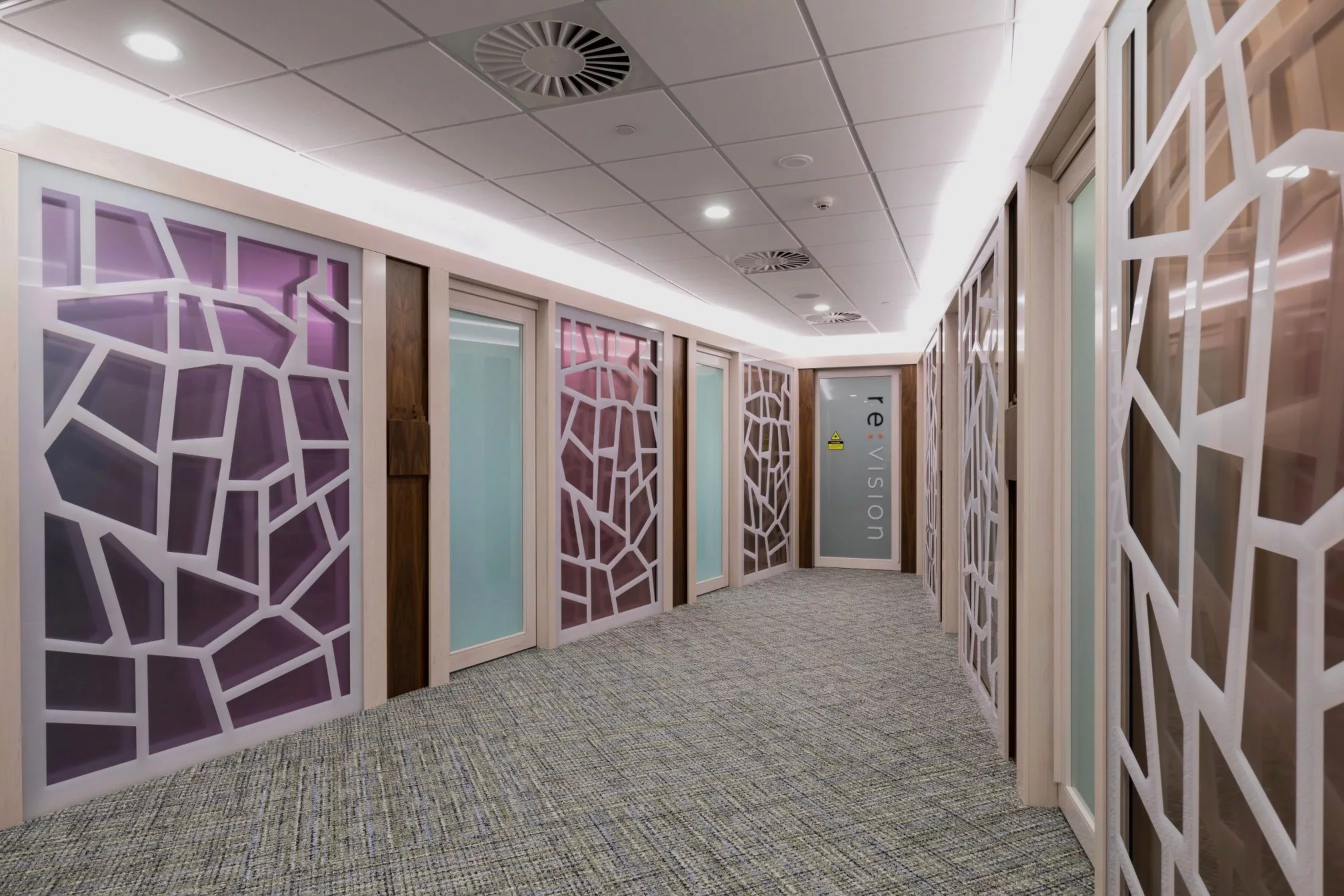
A design that functions perfectly for some, doesn’t mean it will work for everyone. To create a stress-free experience for all patients, consider the patient journey of those with disabilities, such as wheelchair users and the elderly, by integrating accessible design features.
Accessible design features:
– Wide corridors and doorways: Accommodate wheelchairs and walkers, including within bathrooms.
– Lever-style handles and sensor taps: Make doors and sinks easier to use.
– Supportive seating: Provide chairs with arms and higher seats for elderly patients.
By designing with accessibility in mind, you will create a space where every patient feels supported, reducing the stress of visiting the clinic for everyone.
By implementing the tips in this article, your clinic will become significantly more accommodating for patients, helping to reduce anxiety and create a more positive experience. This not only enhances patient satisfaction but also improves staff wellbeing and contributes to a higher standard of care overall.
If you’re looking for expert guidance on the design and fitout of your healthcare facility, contact Focusplan today. We’re ready to help bring your vision to life.

 Back to Projects