Blog


How To Design Your Healthcare Facility For Optimal Infection Control
Designing For Optimal Infection Control
Are you thinking about starting, expanding, or renovating your medical facility?
If so, you know the importance of keeping your patients and staff safe while maintaining compliance with international health guidelines. Additionally, you understand how damaging it would be to your reputation if your patients are negatively impacted by poor infection control during their treatment. Therefore, your new facility needs a design that ensures consistent and reliable infection control every time.
However, it can be costly and impractical to retrofit infection control measures after your facility is built. Incorporating them into the initial design is the best solution. Here are six ways to do it.
1. Optimal Placement of Handwashing Stations:
Maintaining proper hand hygiene is critical to effective infection control. Staff and patients are less likely to transmit harmful microbes with well-placed handwashing stations.
Ideally, these stations should be included in the initial design process, as adding them later can be impractical and costly. Including these stations in treatment rooms, clean and dirty rooms, and consult rooms can be particularly beneficial.
2. Plan your Layout Carefully:
The layout of your facility plays an important role in infection control. It determines the routes taken between key areas in the facility.
With an efficient layout, you can minimize the transportation of contaminated equipment between treatment and clean/dirty rooms and eliminate any clean/dirty path conflicts. Patient areas should be appropriately separated from areas with a higher risk of infection.
Generally, doors and signage are adequate to achieve this. Sometimes, access-controlled doors, which require a swipe card or passcode, may be needed depending on the patient type. To create the right layout for your facility, list the number of rooms and room types you plan to include so possible concept layouts can be drafted.
3. Integrate No-Touch Solutions:
Frequently touched surfaces like door handles, light switches, and basin mixers are prone to spreading infection. That’s why you should consider ways to reduce physical hand contact with surfaces where possible.
For surgical environments, consider using foot-kick switches or sliding automatic doors into theatres. This way, nurses and surgeons can avoid touching any surfaces after scrubbing up before a procedure.
No-touch taps and automatic soap dispensers can also be an excellent way to minimize the spread of surface-dwelling pathogens. Sensor lights and/or installing a master switch for the entire building or area is another simple yet effective way of reducing these infection hotspots.
While adding additional cost, these design choices can be extremely helpful in protecting patients and staff, in addition to reducing the need for excessive cleaning on the high-touch surfaces they replace.
4. Select The Right Cabinetry:
Cabinetry design plays a significant role in maintaining cleanliness within your healthcare facility. Being custom-built, it can cater to the storage of cleaning and sterilization equipment, allowing easy access and proper organization.
Ensuring every piece of your equipment has a place keeps your facility tidy and makes for ease of cleaning. Before choosing cabinetry, assess the supplies and equipment you need to determine how much storage space is required.
It may be necessary to measure larger items, like sterilizers, to create custom-sized bays, shelves, or drawers.
5. Select Appropriate Surfaces:
In areas where infection control is paramount, it is essential to use surfaces that are wipeable and discourage the growth of pathogens. For the floor, homogenous sheet vinyl is best. For more information about selecting vinyl, read our article on flooring for medical facilities here.
For benchtops, stainless steel is often the best choice for maximum infection control. It is impermeable, has extremely high heat resistance, and is resistant to bacterial growth. We recommend opting for this in sterilization departments and clean/dirty rooms.
High-pressure laminate (HPL) can also be a suitable option for slightly less sterile areas as it is durable and wipeable. It is a great choice for patient-facing areas since it provides a slightly more appealing appearance, unlike the harsh appearance of stainless steel. It is also much more cost-effective.
For walls, choose a finish that is easily wipeable, such as a resilient vinyl wall covering or a semi-gloss paint in areas subject to less wear. Read more about choosing wall finishes for your medical facility here.
6. Consider HVAC and Air Treatment:
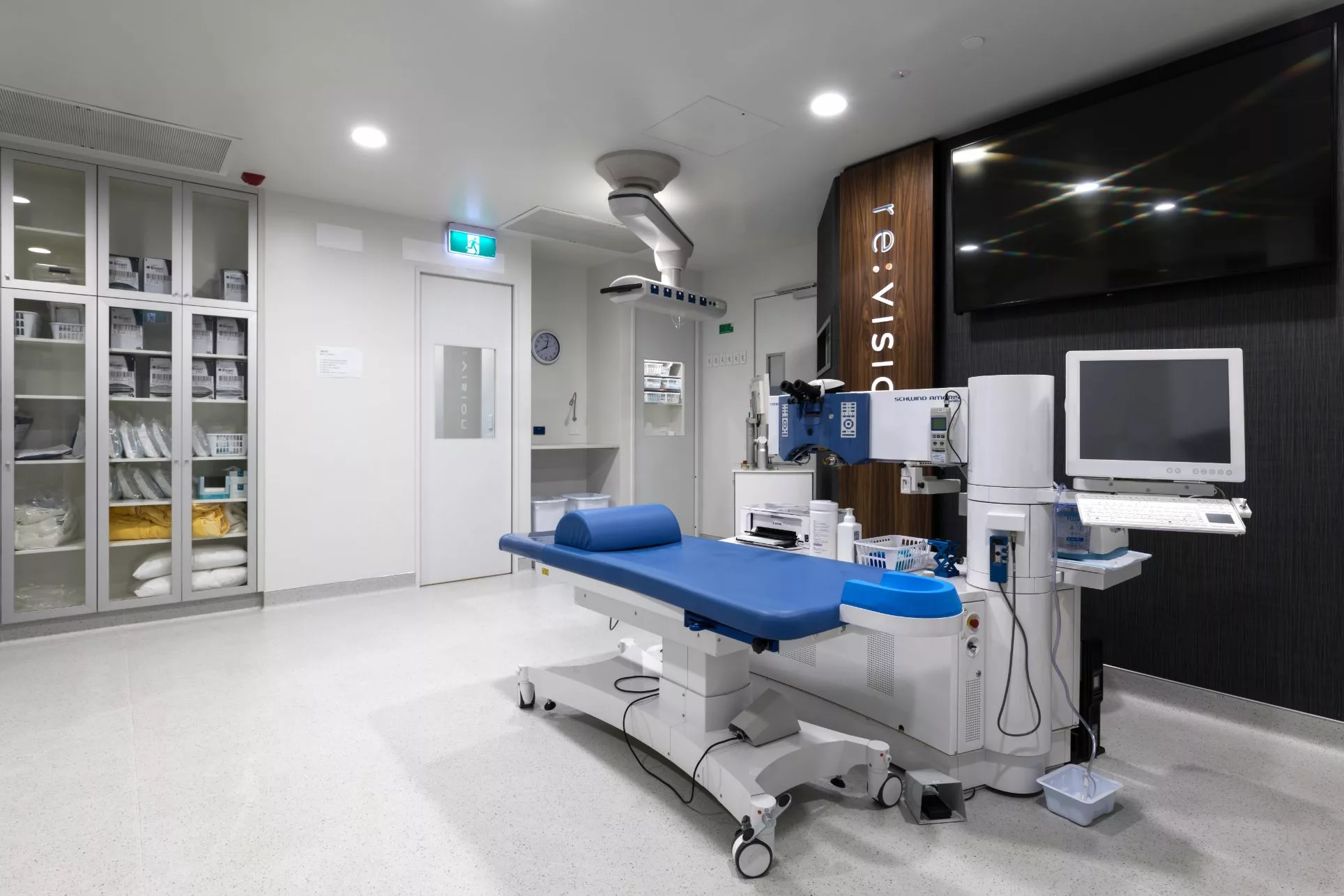
Lastly, your facility must have adequate ventilation and airflow, especially in areas where infection risk is higher.
A proper ventilation system will ensure that contaminated air is not spread around the facility, and the air breathed by patients and staff is clean and safe.
International Health Guidelines recommend that such areas should have an ACH (Air Change per Hour) of 15 or more, meaning that fresh air enters and leaves the room at least 15 times (US Centers for Disease Control and Prevention, 2020).
Additionally, operating theatres may require HEPA filters, which stands for “High-Efficiency Particulate Air Filter.” This means it is extremely effective at removing nearly all tiny airborne particulates from your facility, which could negatively impact vulnerable patients.
Due to various factors like airflow direction and room size, it’s best to have an HVAC consultant assess your facility’s needs through your chosen fitout provider.
We hope you have found this article insightful! The six key strategies outlined in this article provide a framework for designing a facility that prioritizes infection control to keep your patients and staff safe.
By incorporating these measures from the initial planning stages, you can avoid the operational challenges and costs associated with retrofitting later.
References:
Theodorou, C., Simpson, G. S., & Walsh, C. J. (2021). Theatre ventilation. Annals of The Royal College of Surgeons of England, 103, 151-154. https://doi.org/10.1308/rcsann.2020.7146